Proposals to lower health costs get broad support in battlegrounds
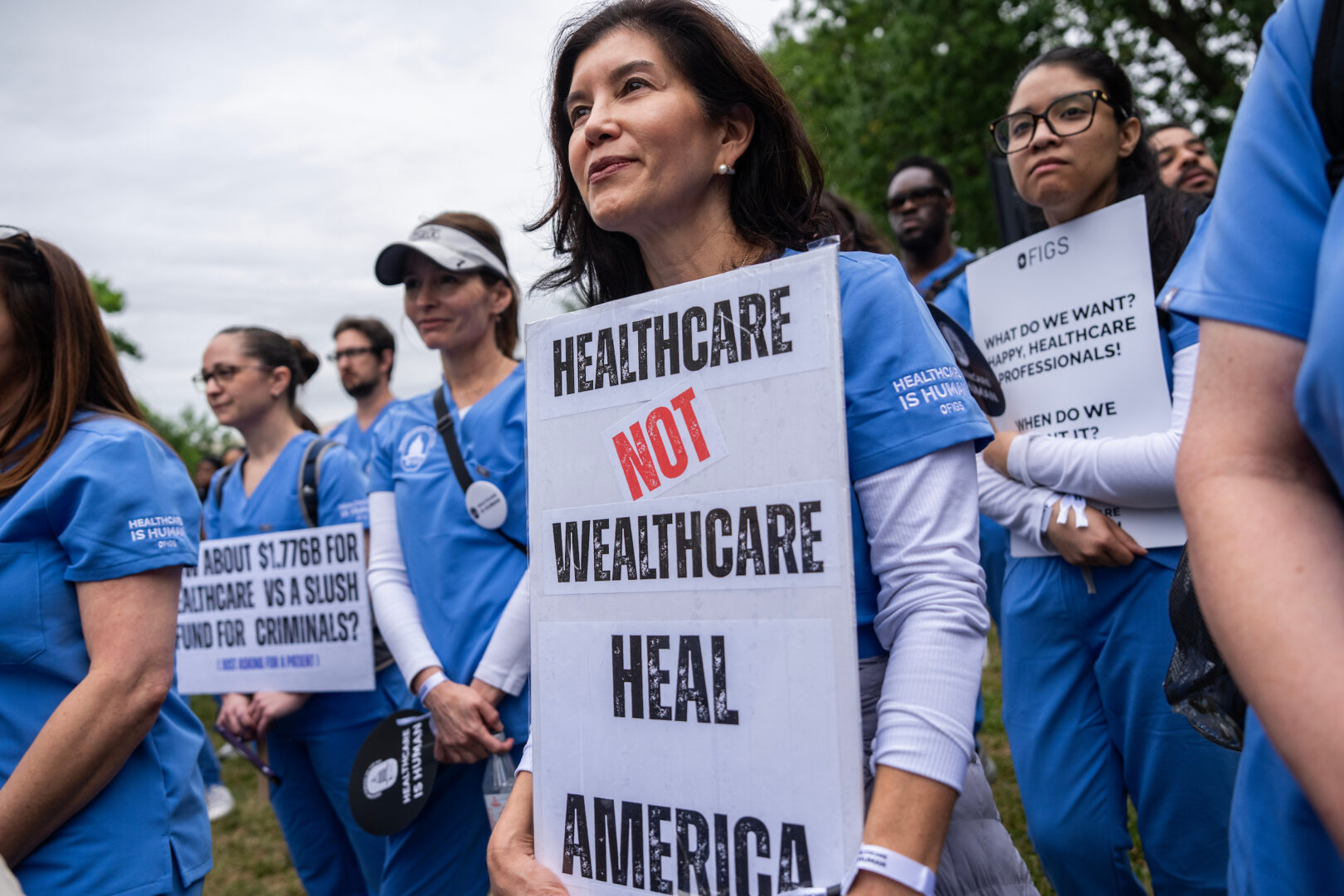
Voters in battleground states and congressional districts tend to voice support for proposals in Congress that would expand access to health care or lower drug costs — often irrespective of their party affiliation — according to new polling from the University of Maryland.
Read more Lawmakers want better data on AI’s workforce impacts
The poll, first shared with CQ Roll Call, surveyed people in 11 competitive states like Pennsylvania, Georgia and Nevada, and 28 competitive congressional districts, finding a lot of common ground. It focused on proposals circulating in Congress, including capping drug prices at what other countries pay and restoring Affordable Care Act enhanced premium tax credits that expired last year.
More than 19,000 people responded, with a large majority liking ideas such as lowering the age for Medicare eligibility and even a new government-run health insurance program. At least two-thirds of respondents from both parties said they favor lowering the Medicare eligibility age to 55, with a similar share favoring the creation of a government-run health insurance plan “that anyone can buy into.”
Steven Kull, the director of the Program for Public Consultation at the University of Maryland, said the results show growing comfort with government involvement in health care as Americans’ health costs rise.
“The situation is stark enough that people are feeling that the government, even people who have maybe historically been more resistant to the idea of government playing an active role, are now more accepting of that idea,” he said in an interview.
In other results, more than 4 out of 5 Democrats, and at least a similar share of Republicans, said they would support measures that would cap the price of prescription drugs at what other countries pay. The Trump administration has attempted to implement this policy through individual deals with pharmaceutical companies, using tariffs as leverage, and has asked Congress to codify it.
Read more Senate weighs next steps on Russia-Iran sanctions
The responses can vary significantly by district.
For example, between 70 percent and 87 percent of Democrats, and between 68 percent to 90 percent of Republicans, depending on the area surveyed, said they would support allowing the government to override patents of prescription drugs developed using federal funds if the price is deemed unaffordable.
Between 83 percent and 94 percent of Democrats and 65 percent to 85 percent of Republicans said that they would support restoring the enhanced ACA premium tax credits. Republican leadership in Congress ultimately opposed expanding the tax credits, while several GOP lawmakers in both chambers tried unsuccessfully to work out a legislative solution to temporarily extend them.
The poll comes as both parties have rallied around the idea of health care affordability ahead of the midterms this fall, and Democrats eyeing a bigger health push down the line.
The survey also found that majorities in both parties supported making substance abuse treatment available to anyone who needs it, and many support a proposal that would allocate $13 billion in funding for such treatment, which would drastically increase the availability.
“That to me is another indication of a kind of shift in favor of the federal government playing a more active role,” Kull said.
Read more Idaho Democrat is latest Senate nominee to drop out in boost to independent rival