Beyond the Front Door: How Movers Navigate Building Rules Before a Mainland-to-Hawaii Pickup
A mainland-to-Hawaii household move can be carefully planned right up until the moving truck reaches the customer’s building. Then an unexpected elevator restriction, loading-zone rule, or limited access window can change the entire pickup process. Apartment towers, condominiums, gated communities, and managed residential complexes often have procedures that movers must follow before household goods can leave the property.
For customers planning a long-distance relocation, https://hawaiimovingservices.com/ provides a starting point for understanding the broader coordination involved. Professional movers do not simply arrive and start carrying boxes. They can review property requirements in advance and build those restrictions into the pickup schedule.
Identifying Building Rules Before Moving Day
The most effective way to handle access restrictions is to discover them before the crew arrives. Property managers may require advance notice, proof of insurance, elevator reservations, specific loading hours, or authorization from the resident.
Mainland to Hawaii Movers can ask customers for relevant building instructions during the planning stage. This allows the moving team to determine whether additional time, equipment, or coordination will be necessary.
Questions Worth Asking Property Management
Every building has different procedures, but customers may want to confirm:
- When moving trucks are permitted to arrive
- Where the vehicle can park during loading
- Whether a service elevator must be reserved
- Which entrance movers should use
- Whether hallways and elevators require protective coverings
- Whether a building employee must supervise access
- How long the loading appointment lasts
Gathering this information early reduces last-minute surprises.
Working Around Elevator Reservations
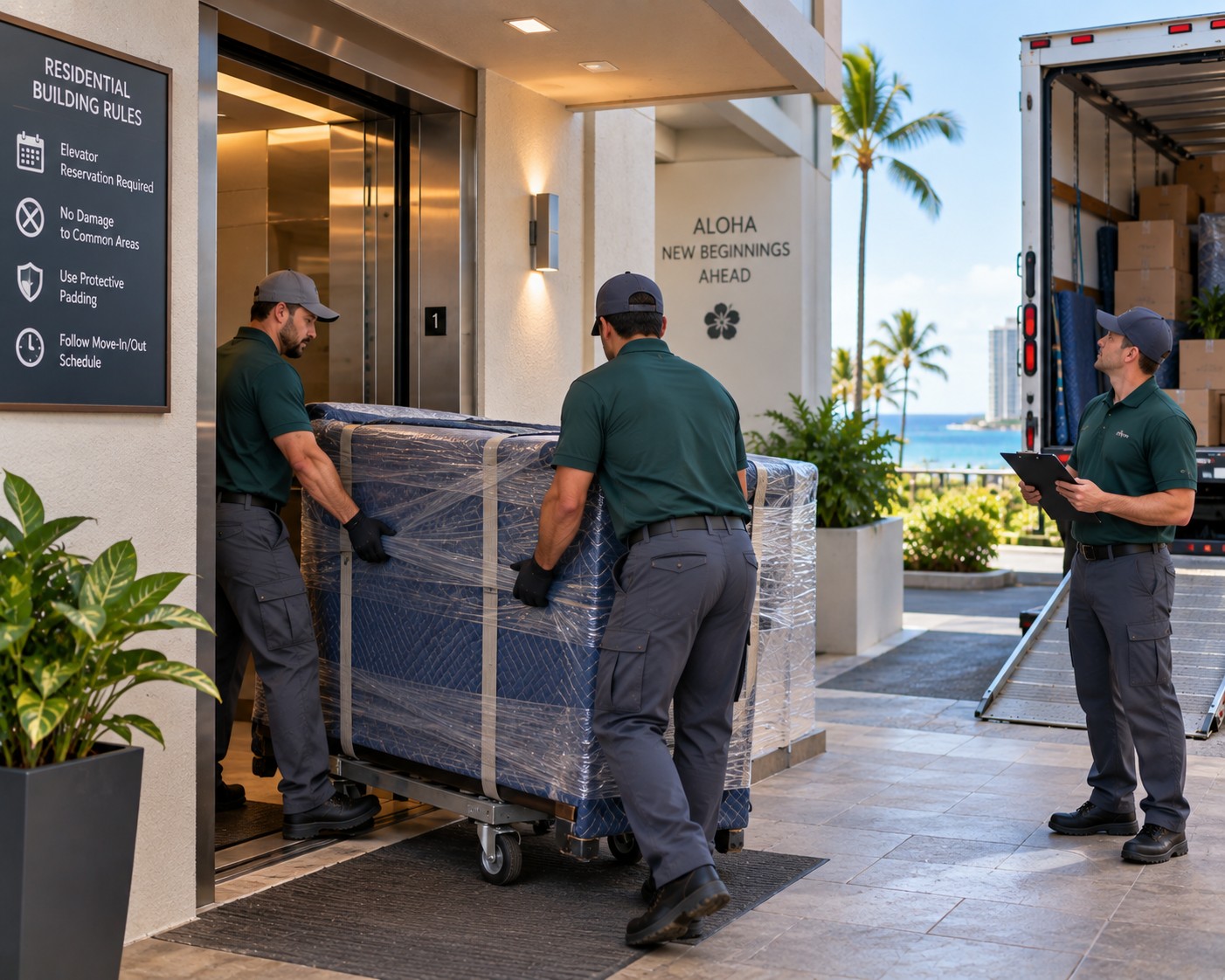
Elevators are often one of the biggest logistical factors in apartment and condominium pickups. A building may provide only one service elevator, and it may be shared with maintenance workers or other residents.
If the elevator is reserved for a specific period, the moving crew needs to work efficiently within that window. Boxes should ideally be packed and ready before the appointment begins, while furniture that requires disassembly should be identified beforehand.
For larger pieces, movers can assess whether the elevator dimensions are sufficient. Measuring sofas, wardrobes, beds, and other bulky furniture can help determine whether they can be moved through the designated route.
Protecting Shared Areas During Loading
Building management may require protection for floors, walls, doors, and elevator interiors. This is particularly common in recently renovated properties or buildings with expensive finishes.
Professional movers can use suitable protective materials along the planned path. This helps reduce the risk of accidental scuffs while furniture and boxes are transported from the residence to the truck.
The loading route itself should also be kept organized. Boxes can be staged carefully without blocking emergency exits, hallways, or other residents’ access.
Managing Limited Loading Zones
Urban buildings frequently have little space for moving trucks. A vehicle may need to park at a designated curb, use a loading bay, or arrive during a specific time period.
Customers should provide movers with accurate information about parking and building access. If the truck cannot remain directly outside the entrance, the distance between the residence and vehicle may affect the amount of time required.
A professional moving plan accounts for this additional carrying distance rather than assuming that the truck can always stop at the front door.
Handling Gated Communities and Private Roads
Restrictions are not limited to high-rise buildings. Gated communities may require security approval, visitor registration, or advance notice for commercial vehicles.
Mainland to Hawaii Movers can incorporate gate instructions, access codes, security contacts, and vehicle restrictions into the pickup plan when customers provide the necessary information.
When the Property Has Multiple Access Points
Large residential developments may have separate entrances for residents, deliveries, and moving vehicles. Using the wrong entrance can create delays, particularly when a truck cannot easily turn around or reach the building from another road.
A simple access map or written instruction from property management can therefore be valuable.
Connecting Pickup Restrictions With the Long-Distance Plan
Building access is only the first stage of a mainland-to-Hawaii relocation. Once household goods leave the residence, they enter a larger transportation process involving mainland handling and shipment toward Hawaii.
Customers can review https://hawaiimovingservices.com/mainland-moving/ when planning the wider relocation and considering how pickup arrangements fit into the overall schedule.
A successful pickup depends on more than having boxes packed. When building rules are identified early, elevators are reserved, loading zones are understood, and the route is prepared, movers can begin the shipment without unnecessary interruptions. That preparation gives the household move a stronger start and helps connect a complicated building pickup with the transportation stages that follow.