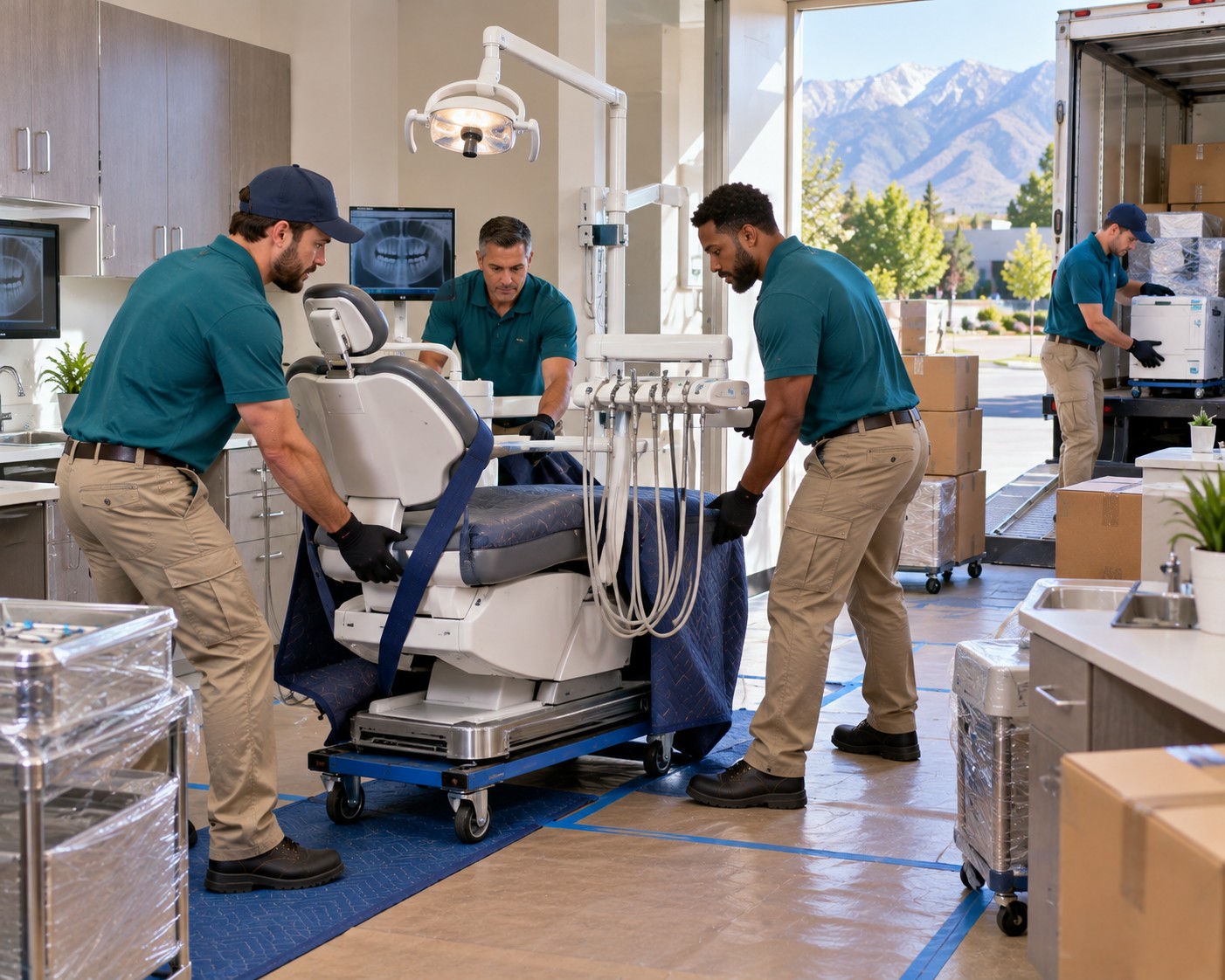
Moving a Dental Practice in Sandy: Protecting Equipment From Chair to New Office
Relocating a dental practice is fundamentally different from moving an ordinary office. Dental chairs, imaging systems, sterilization equipment, cabinetry, compressors, reception furniture, and delicate instruments all require careful coordination. A poorly organized move can do more than damage expensive equipment—it can delay appointments and interrupt patient care.
For dental practices in Sandy, Utah, the relocation should therefore be treated as a planned operational transition. The physical move is only one part of the process. Equipment preparation, technology coordination, building access, and the reopening schedule all need to work together.
Begin With an Equipment-Based Inventory
The first step is identifying exactly what will travel to the new practice. Dental equipment can include treatment chairs, delivery systems, X-ray units, imaging monitors, sterilizers, autoclaves, compressors, suction systems, cabinetry, laboratory equipment, computers, and patient-room furniture.
Each item should be documented before preparation begins. Record its condition, accessories, cables, removable components, and any special handling requirements. Photographs can also provide a useful reference when equipment is reassembled at the destination.
Best Moving Services for a dental relocation should be selected with the complexity of the equipment in mind rather than treating the project like a standard commercial furniture move.
Coordinate With Equipment Specialists
Some dental equipment should not simply be disconnected and packed without professional guidance. Imaging systems, treatment units, sterilizers, compressors, and specialized technology may have manufacturer-specific requirements.
The practice should coordinate with equipment technicians and the moving team before the scheduled relocation. Decide who will disconnect each system, who will prepare it for transportation, and who will handle calibration or installation at the new location.
This division of responsibility helps prevent confusion on moving day.
Prepare the New Sandy Office First
The destination should be operationally ready before equipment begins arriving. Verify that electrical connections, plumbing, ventilation, networking, and other required infrastructure are prepared for the equipment being installed.
Measure treatment rooms and entrances carefully. Dental chairs and cabinetry can be surprisingly difficult to maneuver through narrow corridors or tight doorways. Knowing the route in advance can determine whether equipment needs to be partially disassembled.
For practices relocating elsewhere in Utah, https://starvanlinesmovers.com/locations/utah can also be useful when reviewing moving support across the state.
Protect Sensitive Equipment During Transportation
Dental technology can contain delicate components that require protection against vibration, impact, moisture, and improper positioning. Equipment should be secured using suitable padding and stabilization methods rather than relying on ordinary household moving materials.
Smaller instruments and accessories should be grouped and labeled according to the treatment room or system they belong to. This makes the installation process considerably easier.
Computers and digital imaging equipment deserve particular attention. Back up important practice data before disconnecting systems and keep essential digital information secure throughout the relocation.
Keep Instruments and Records Accounted For
Not everything should travel inside the main moving shipment. Patient records, controlled materials, sensitive documents, and high-value portable equipment should be handled according to the practice’s security and regulatory procedures.
Create a separate checklist for these items. Assign responsibility to specific staff members so there is no uncertainty about who has possession of them during the transition.
Build the Move Around Patient Scheduling
A dental practice cannot operate normally while treatment rooms are being dismantled. The relocation schedule should therefore be designed around the appointment calendar.
Where possible, group the most disruptive work into a defined closure period. This may allow the practice to complete packing, transportation, installation, and basic testing without repeatedly interrupting patient appointments.
Staff should also know when the old office will close, when the new location will become operational, and which tasks they are responsible for before reopening.
Best Moving Services become particularly valuable when the physical relocation is synchronized with this broader business schedule.
Plan the Reopening Sequence
The first day at the new office should not begin with unopened boxes scattered across treatment rooms. Establish a priority order for setup.
Treatment rooms, sterilization areas, imaging equipment, reception technology, and essential administrative workstations should be addressed according to the practice’s operational needs. Less urgent furniture and storage items can follow afterward.
A carefully coordinated relocation allows a Sandy dental practice to protect valuable equipment while reducing downtime. When equipment inventories, specialist requirements, building access, transportation, and patient scheduling are considered together, moving to a new office becomes a manageable business transition rather than an interruption that extends indefinitely.