Office Furniture Movers in Dunedin for Organized Workplace Relocations
An office move can change the way a business operates long before the first employee sits at a new desk. Desks, conference tables, filing cabinets, reception furniture, shelving, chairs, and storage units all have to leave one location and arrive at another without unnecessary damage or downtime. Unlike household furniture, office furnishings are usually connected to a specific workspace, so their placement matters just as much as their transportation.
Businesses planning a relocation can begin organizing the physical side of the process through https://dunedinmovers.com/. A coordinated approach allows furniture, equipment, and other workplace belongings to be moved according to the new office layout rather than simply unloaded wherever space is available.
Start With the New Office Layout
Before anything is packed, review the floor plan of the destination. Identify where individual desks, meeting tables, filing cabinets, reception counters, and storage furniture will go.
This is particularly important when moving a large office. Without a placement plan, movers may need to shift heavy pieces repeatedly after delivery, adding unnecessary work and increasing the possibility of damage.
Create a Furniture Inventory
Make a basic list of the major pieces being relocated. Include measurements where necessary and identify furniture that requires disassembly.
The inventory can be divided into categories such as:
- Employee workstations
- Conference room furniture
- Reception pieces
- Filing and storage cabinets
- Break-room furniture
- Shelving
- Executive office furniture
Marking each item with its destination room or department makes unloading significantly more efficient.
Preparing Desks and Workstations
Office desks come in many configurations. Some are simple standalone units, while others form modular workstations with attached panels, drawers, shelving, and cable-management systems.
Photograph complicated setups before disassembly. Label individual components so employees or installers know which pieces belong together. Hardware should be stored in clearly marked bags rather than placed loose inside moving cartons.
If desks have computers, monitors, docking stations, or other electronics attached, those components should be handled separately according to the company’s IT relocation plan.
Moving Heavy Office Furniture Safely
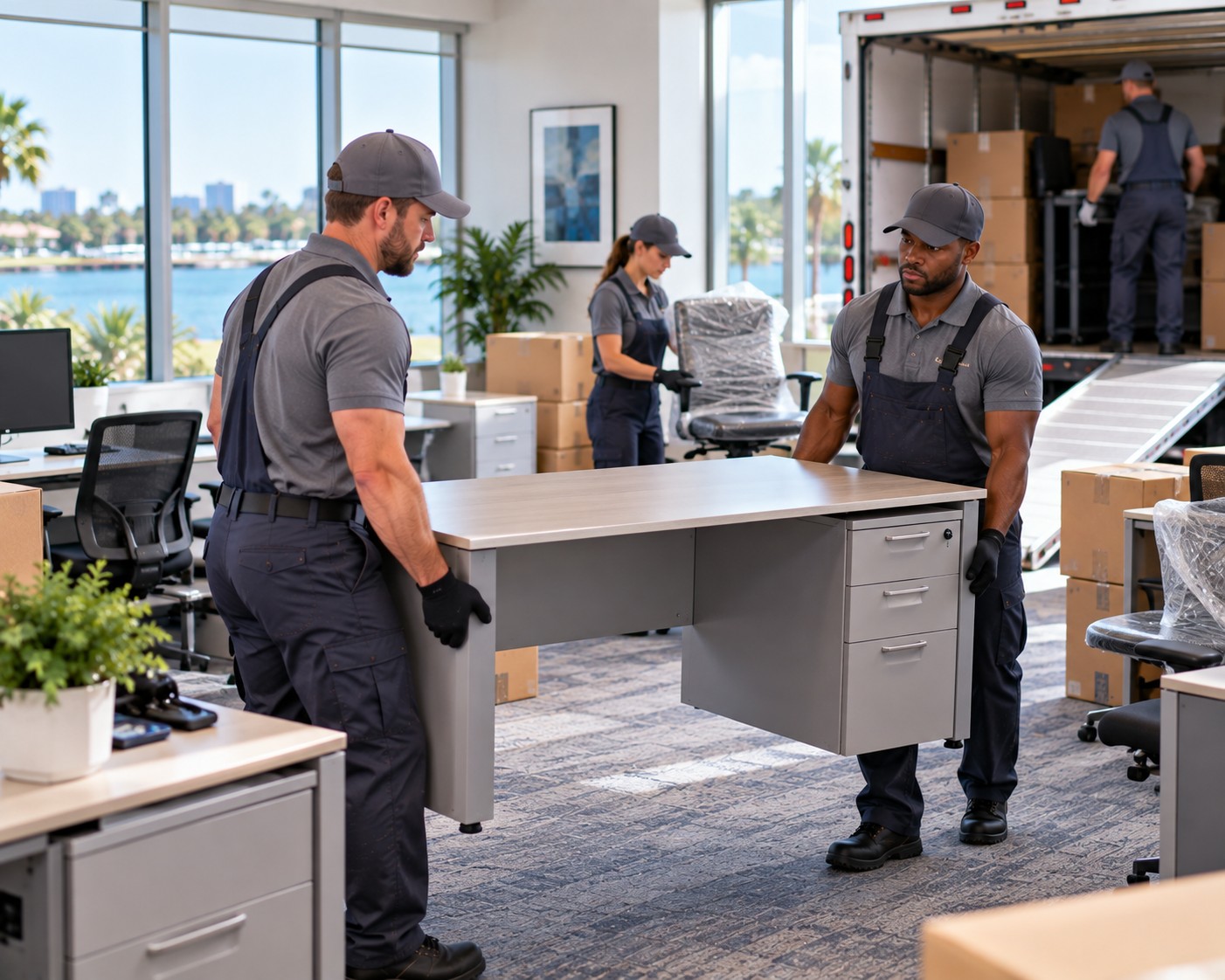
Filing cabinets, large conference tables, bookcases, and executive desks can be extremely heavy. Their weight distribution can also make them awkward to carry through doorways or corridors.
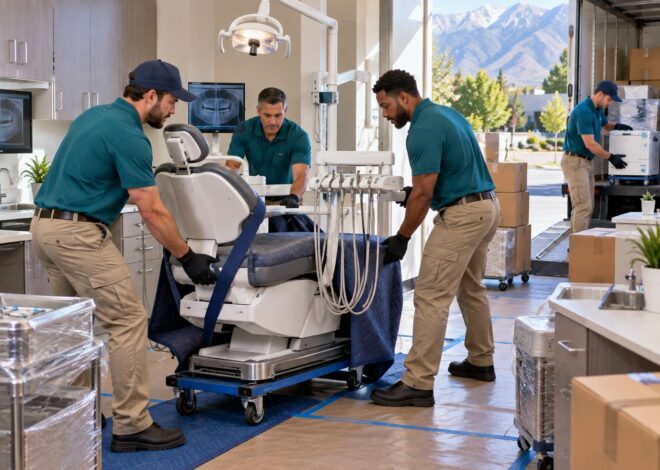
Professional movers use appropriate equipment and coordinated lifting techniques to reduce unnecessary strain. Furniture should be protected with moving blankets or other suitable materials, particularly when pieces have polished surfaces, glass panels, or delicate finishes.
Walls, elevators, floors, and door frames may also require protection during a commercial relocation. This becomes especially important in shared office buildings where common areas must remain presentable.
Coordinating With Building Access
Office buildings often have stricter moving requirements than private residences. There may be designated loading docks, freight elevators, restricted delivery hours, parking rules, or advance booking requirements.
Confirm these details before moving day. If an elevator needs to be reserved, make the arrangement early. The same applies to loading areas and security procedures.
The commercial moving services available at https://dunedinmovers.com/commercial-movers/ can be incorporated into a broader relocation plan when furniture transportation needs to be coordinated with other office moving requirements.
Keeping Employees Out of the Moving Process
One advantage of professional furniture moving support is that employees can focus on their actual responsibilities instead of spending working hours carrying desks and cabinets.
Assign internal staff to tasks that require their knowledge, such as identifying sensitive documents, preparing computers, confirming workstation assignments, and communicating with employees. Let the physical handling of heavy furniture remain a separate responsibility.
Protect Important Office Documents
Filing cabinets may contain contracts, personnel records, financial paperwork, or other confidential materials. Decide in advance whether these documents should remain locked during transportation or be handled directly by authorized employees.
This separation of responsibilities can make the move more secure and easier to manage.
Reassembling the New Workplace
Delivery should follow the new office plan. Larger furniture can be positioned first, followed by desks, chairs, shelving, and smaller pieces.
Once major furniture is placed, employees can begin reconnecting equipment and organizing their work areas. A final walkthrough can identify desks that need repositioning, missing components, or furniture that requires additional assembly.
For companies preparing an office relocation in Dunedin, professional furniture movers can turn a physically demanding project into a structured operation. With accurate inventories, advance building coordination, careful protection, and a destination-based placement plan, the new workspace can become functional much sooner.