Fayetteville Apartment Moving: How to Master Loading and Parking Access
Moving from an apartment involves a logistical puzzle that homeowners do not always face. The furniture may be ready, the boxes may be labeled, and the moving date may be confirmed, yet everything can become complicated if the truck cannot park close to the building or the loading area is occupied.
In Fayetteville, apartment residents should treat parking and loading access as part of the moving plan rather than an afterthought. A Greensboro relocation can involve similar challenges when several properties, limited loading zones, or busy residential areas are involved. Careful preparation helps reduce waiting time and keeps the move flowing from the apartment door to the truck.
For homeowners arranging a North Carolina move, https://milestonerelocation.com/greensboro can be useful when exploring professional moving services and planning the transportation stage.
Check the Building Rules Before Moving Day
Apartment communities often have specific policies for relocations. Some require residents to reserve a loading area, notify management, provide proof of insurance, or use a designated entrance. Others may restrict moving activity during certain hours.
Contact the property manager well before moving day. Ask about:
- Truck parking locations
- Loading-zone reservations
- Elevator availability
- Moving-hour restrictions
- Building access codes
- Required deposits or fees
- Protective requirements for hallways and elevators
Written confirmation is preferable because building policies can be easy to misunderstand when communicated informally.
Reserve the Elevator if Necessary
An elevator can dramatically change the pace of an apartment move. If the building has a service or freight elevator, reserve it for the appropriate time and ask about its dimensions and weight capacity.
Measure large furniture before moving day. A sectional, mattress, wardrobe, or oversized cabinet may require more space than expected. Knowing the elevator dimensions can help determine whether certain items need to be disassembled.
Plan Where the Moving Truck Will Stand
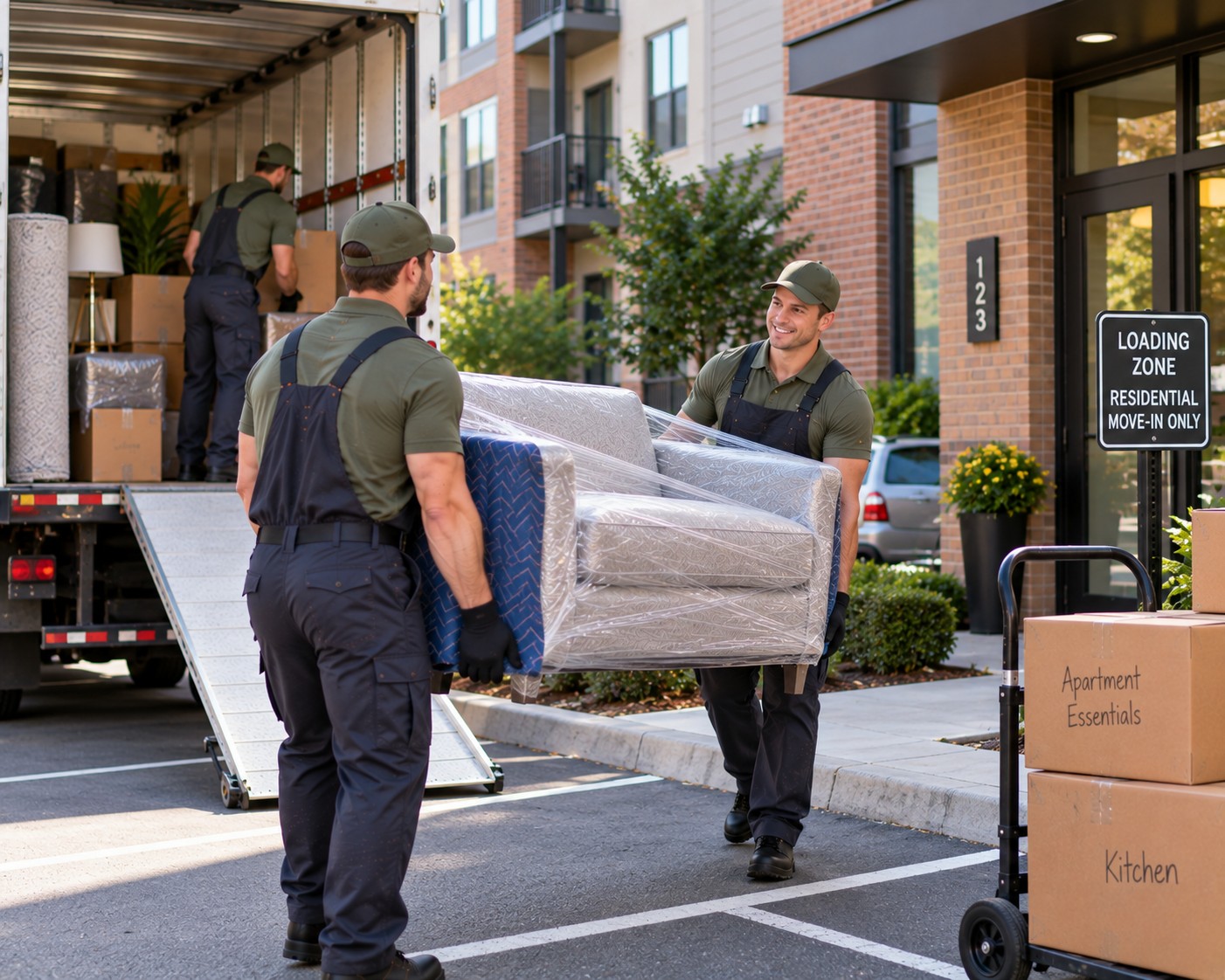
The distance between the truck and apartment entrance matters. Every extra stretch of pavement adds carrying time, particularly when transporting heavy furniture.
Walk around the property before the move and identify the most practical truck position. Consider gates, trees, low branches, fire lanes, neighboring vehicles, loading bays, and turning space.
If the designated loading area is small, determine whether the truck can arrive at the agreed time without blocking other residents. Apartment communities can become congested quickly, especially during weekends and at the beginning or end of the month.
A Greensboro relocation involving apartment access should follow the same principle: confirm the actual loading route rather than assuming that the nearest parking space will be available.
Keep the Loading Path Clear
Once the truck arrives, the route from the apartment to the vehicle should be as unobstructed as possible. Remove small furniture, boxes, bicycles, plants, and other objects from hallways before carrying begins.
Inside the apartment, create a staging area near the entrance for packed boxes. Keep fragile items separate from heavier cartons and avoid stacking belongings where they could fall into the walking path.
Protective materials may also be required in common areas. Some apartment buildings require floor coverings, corner protection, or elevator padding during a move. Follow the property’s rules to avoid delays or potential damage claims.
Organize the Truck Loading Sequence
Loading is more efficient when there is a logical order. Heavy furniture generally needs to be positioned strategically inside the truck, while boxes and lighter belongings can fill appropriate spaces around it.
Do not simply load whatever is closest to the entrance. Think about weight distribution, stability, and which items need to remain accessible when unloading.
Separate Priority Items
Keep documents, valuables, medications, chargers, and other essentials separate from the main shipment. If you need something immediately after reaching the new apartment, it should not be buried behind furniture.
Label boxes according to their destination room. This allows the unloading crew to move items directly into the correct areas instead of creating a second relocation inside the new home.
Prepare for Delays
Even a carefully planned apartment move can encounter unexpected problems. Another resident may occupy the loading zone, an elevator may be temporarily unavailable, or traffic may delay the moving truck.
Build some flexibility into the schedule. Keep the building manager’s contact information available and make sure everyone involved knows the agreed loading location.
For residents planning a Fayetteville move, https://milestonerelocation.com/fayetteville/ can provide another starting point for arranging local moving assistance and preparing for the practical details of apartment access.
Good parking and loading preparation can make a noticeable difference on moving day. By confirming building rules, reserving necessary facilities, planning truck access, protecting common areas, and organizing the loading sequence, Fayetteville apartment residents can turn a complicated move into a much more controlled process.